When autumn leaves start falling, they create a beautiful scene — but leaving them on your lawn is a recipe for dead patches, disease, and pests. Here's why leaf removal matters and how to stay ahead of the fall leaf avalanche.
Why You Can't Ignore Fallen Leaves
They Smother the Grass
A thick mat of leaves blocks sunlight and air from reaching the grass. Even a few days of coverage can kill the grass underneath, leaving you with bare patches come spring.
They Trap Moisture
Wet leaves create a damp, dark environment that's perfect for fungal diseases. Snow mold, brown patch, and other lawn diseases thrive under leaf cover.
They Attract Pests
Piles of decomposing leaves attract insects, rodents, and other pests that can damage your lawn and find their way into your home.
They Stifle Growth
Leaves left on the lawn decompose slowly. While a thin layer can add organic matter, a thick layer creates an impenetrable barrier that prevents new grass from emerging.
How Often Should You Remove Leaves?
During peak fall (October–November in Atlanta), you should remove leaves weekly. Don't wait until all the leaves have fallen — by then, the damage may already be done.
Leaf Removal Methods
1. Mulching Mower
If you have a light layer of leaves, a mulching mower chops them into fine pieces that decompose quickly and feed the soil. This is the easiest method and adds free organic matter to your lawn.
2. Leaf Blower
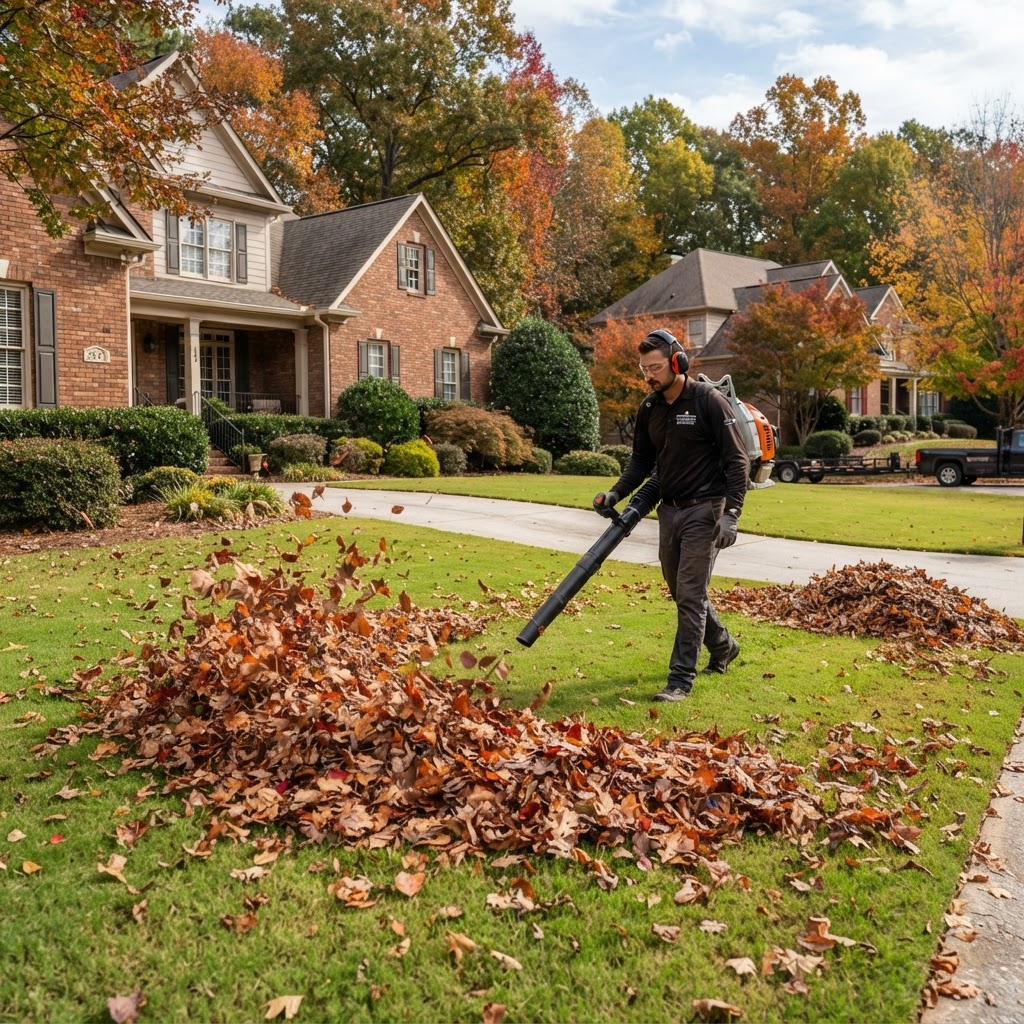
Best for moving large volumes of leaves quickly. Blow leaves onto a tarp, then drag them to your collection area or compost pile.
3. Raking
The traditional method. Best for small lawns or when leaves are wet and heavy. Good exercise, but labor-intensive for large properties.
4. Lawn Vacuum
A powered vacuum that sucks up leaves and shreds them. Great for large properties but requires an equipment investment.
What to Do With Collected Leaves
- Compost them: Leaves are "brown" material — perfect for your compost pile.
- Mulch your beds: Shredded leaves make excellent winter mulch for garden beds.
- Leaf mold: Let leaves decompose in bags for a year to create leaf mold — a premium soil amendment.
- Curbside pickup: Many Atlanta-area municipalities offer fall leaf collection. Check your local schedule.
The Don'ts of Leaf Removal
- Don't burn leaves — it's illegal in many areas, creates air pollution, and is a fire hazard.
- Don't push leaves into the street — they clog storm drains and can cause flooding.
- Don't wait too long — wet, compacted leaves are much harder to remove and cause more damage.
- Don't ignore the last leaves — even a few leftover leaves can smother spring growth.
Don't Have Time for Leaf Removal?
Fall is busy enough without spending every weekend raking. LawnSmart offers scheduled leaf removal services throughout the fall season. We clear leaves from your lawn, beds, and hardscapes — and haul them away. Book your leaf removal service today.
Ready for a Healthier Lawn?
Book a professional LawnSmart service today. Free estimates, certified technicians.
Book a Service