As winter approaches, your warm-season lawn is preparing for dormancy. It's tempting to step away and let nature take its course — but a few simple steps now will protect your lawn through the cold months and set it up for a fast, healthy green-up next spring.
Understanding Lawn Dormancy
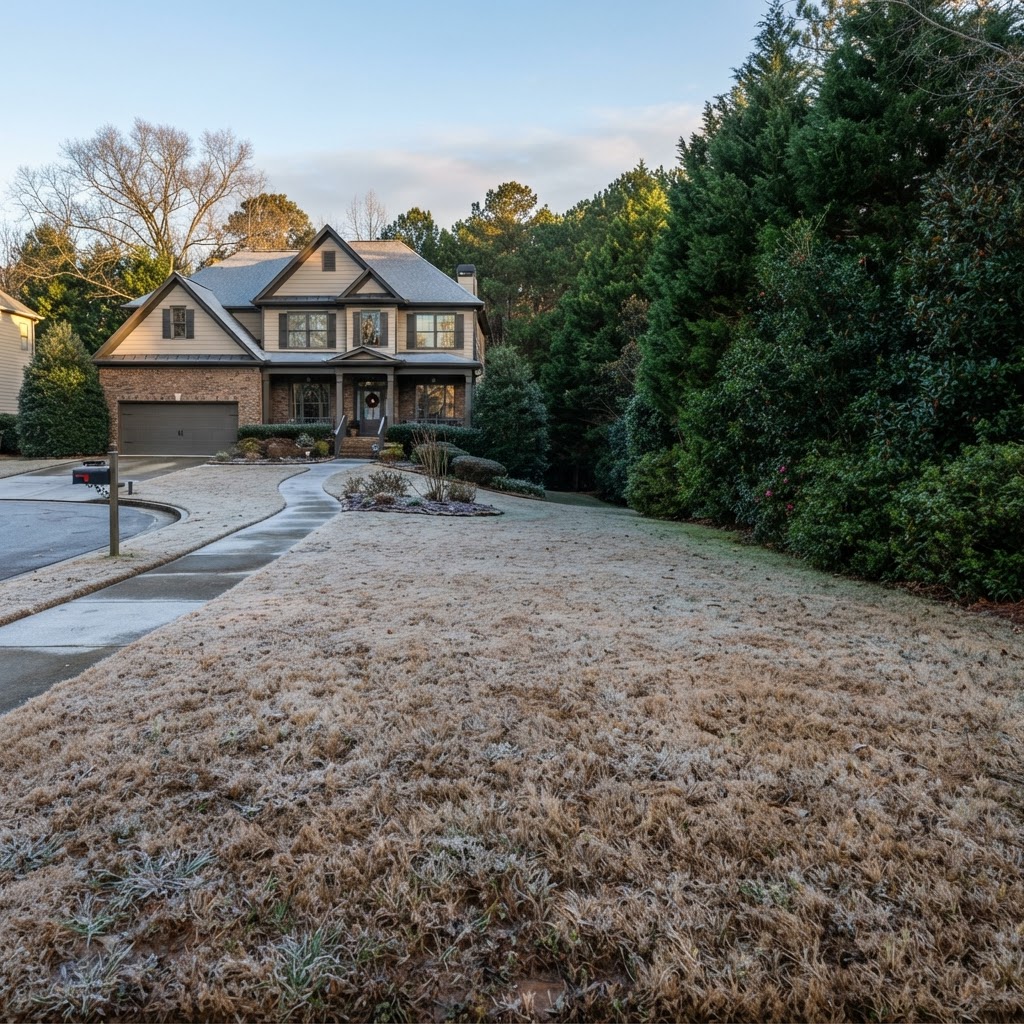
Warm-season grasses (Bermuda, Zoysia, Centipede, St. Augustine) go dormant when soil temperatures drop below 55°F. The grass stops growing, turns brown, and conserves energy in its roots. This is a natural survival mechanism — not a sign of death.
Dormant grass is still alive. It needs minimal care, but what you do (or don't do) during winter matters.
Your Winter Lawn Care Checklist
1. Final Mow at the Right Height
Give your lawn one last mow before it goes fully dormant. For warm-season grasses:
- Bermuda: 1.5 inches (slightly higher than summer)
- Zoysia: 2 inches
- Centipede: 1.5 inches
- St. Augustine: 3 inches
Raising the height slightly helps insulate the roots and protects the crown from freezing temperatures.
2. Clean Up Debris
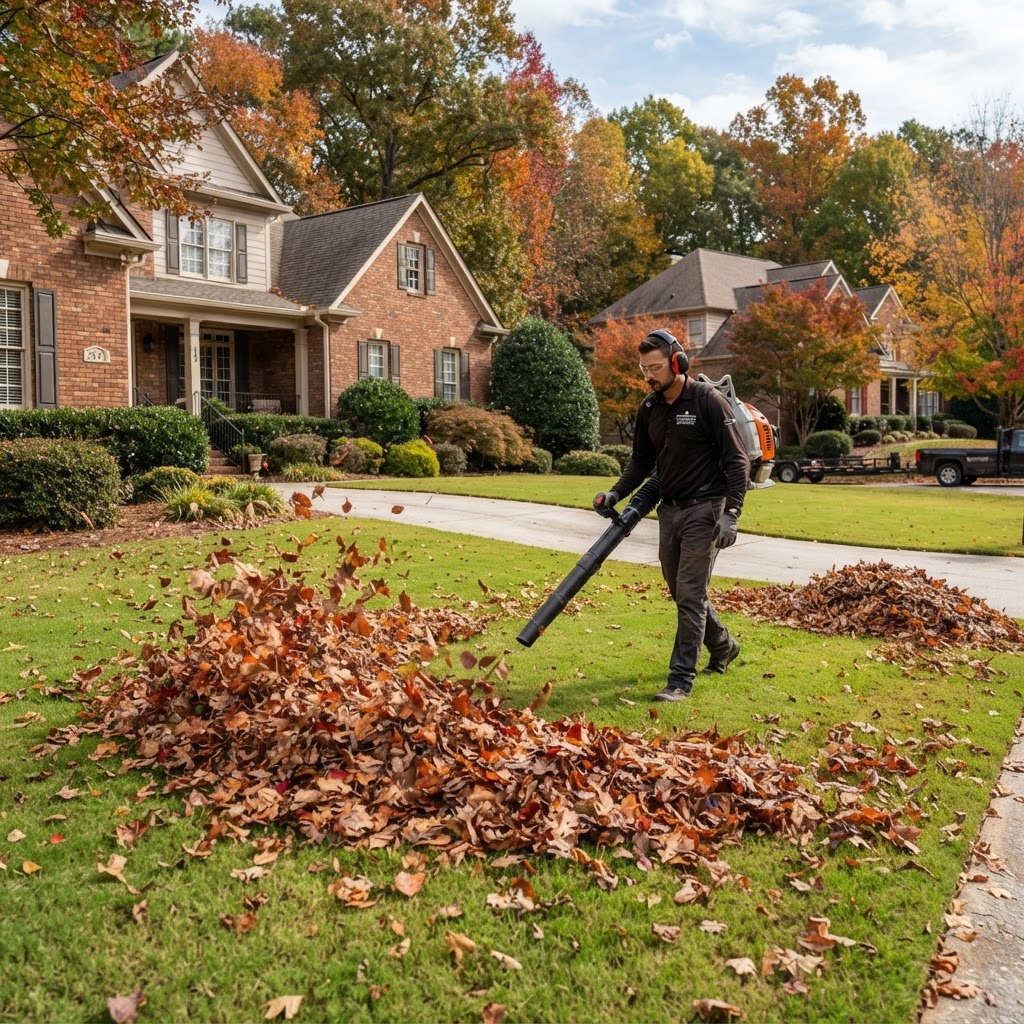
Remove leaves, sticks, and debris from the lawn before winter. A layer of leaves left on dormant grass can smother it, create disease conditions, and kill patches that won't recover until spring.
3. Avoid Foot Traffic
Dormant grass is fragile. Heavy foot traffic on frozen or dormant turf can crush the crowns and create bare paths that don't recover in spring. Keep walkways clear and discourage shortcuts across the lawn.
4. Don't Park on the Lawn
Cars and trucks compact the soil and kill dormant grass. Even a short-term parking situation can leave tire tracks that last until the following fall.
5. Stop Fertilizing
Applying nitrogen fertilizer in late fall pushes tender new growth that winter cold will kill. Your last fertilizer application should be a potassium-rich winterizer applied in October — not later.
6. Water Only If Needed
Dormant grass needs very little water — about 0.25 inches per month if there's no rainfall. Overwatering dormant grass promotes fungal disease. Only water if there's an extended dry spell with no rain for 3+ weeks.
7. Treat Winter Weeds
Winter weeds like poa annua, chickweed, and henbit germinate in fall and grow through winter. Apply a pre-emergent in early fall to prevent them, and spot-treat any that appear with a post-emergent herbicide on a warm day (50°F+).
8. Service Your Equipment
Winter is the perfect time to:
- Sharpen mower blades
- Change the oil and spark plug (gas mowers)
- Clean and store your mower
- Service other lawn equipment
- Plan your spring lawn care schedule
What NOT to Do in Winter
- Don't aerate warm-season lawns — do this in late spring/early summer when the grass is actively growing.
- Don't overseed with ryegrass unless you specifically want a winter-green lawn (it requires extra maintenance and can compete with your warm-season grass in spring).
- Don't apply de-icing salt near the lawn — it damages grass and soil. Use sand or calcium magnesium acetate instead.
- Don't mow frozen grass — the blades break instead of cutting cleanly.
Preparing for Spring
While your lawn rests, use the time to plan:
- Schedule your spring aeration and fertilization
- Order grass seed for overseeding thin areas
- Get a soil test so you know exactly what nutrients your lawn needs
- Book your seasonal lawn care services before the spring rush
Let LawnSmart Handle the Seasons
LawnSmart offers year-round lawn care programs tailored to Atlanta's warm-season grasses. From the final fall cleanup to the first spring green-up, we keep your lawn on schedule. Book your winter prep service today.
Ready for a Healthier Lawn?
Book a professional LawnSmart service today. Free estimates, certified technicians.
Book a Service