Fertilizer is food for your lawn. But just like people, grass needs the right nutrients at the right time — not a one-size-fits-all approach. Understanding what's in your fertilizer and when to apply it is key to a thick, healthy, weed-free lawn.
Understanding N-P-K
Every fertilizer bag displays three numbers, like 16-4-8. These represent the percentage by weight of three primary nutrients:
- Nitrogen (N): Promotes green, leafy growth. The most important nutrient for lawn color and density.
- Phosphorus (P): Supports root development and seed establishment. Essential for new lawns.
- Potassium (K): Strengthens the plant against disease, drought, and cold. The "immune system" nutrient.
A 16-4-8 fertilizer is 16% nitrogen, 4% phosphorus, and 8% potassium.
What Your Lawn Needs
Spring
High nitrogen to kick-start green-up and growth after winter dormancy. Look for an N-P-K ratio like 20-5-10.
Summer
Balanced fertilizer to maintain health during heat stress. Potassium becomes more important. Look for something like 15-5-15.
Fall
High potassium to strengthen roots for winter. This is the most important feeding of the year for warm-season grasses. Look for a ratio like 8-0-24 or 10-0-20.
Slow-Release vs. Quick-Release
- Quick-release nitrogen gives an immediate green-up but can burn grass if over-applied. Growth is fast but short-lived.
- Slow-release nitrogen feeds gradually over 6–12 weeks. Provides steady growth, reduces burn risk, and is more environmentally friendly.
For most lawns, a fertilizer with at least 30% slow-release nitrogen is ideal.
When to Fertilize Warm-Season Grasses (Atlanta)
| Month | Application | Purpose | |-------|------------|---------| | April | Spring green-up | Jump-start growth | | June | Summer feeding | Maintain color and density | | August | Late summer feeding | Sustain health through heat | | October | Winterizer | Strengthen roots for dormancy |
How to Apply Fertilizer
- Measure your lawn area — fertilizer rates are per 1,000 sq ft.
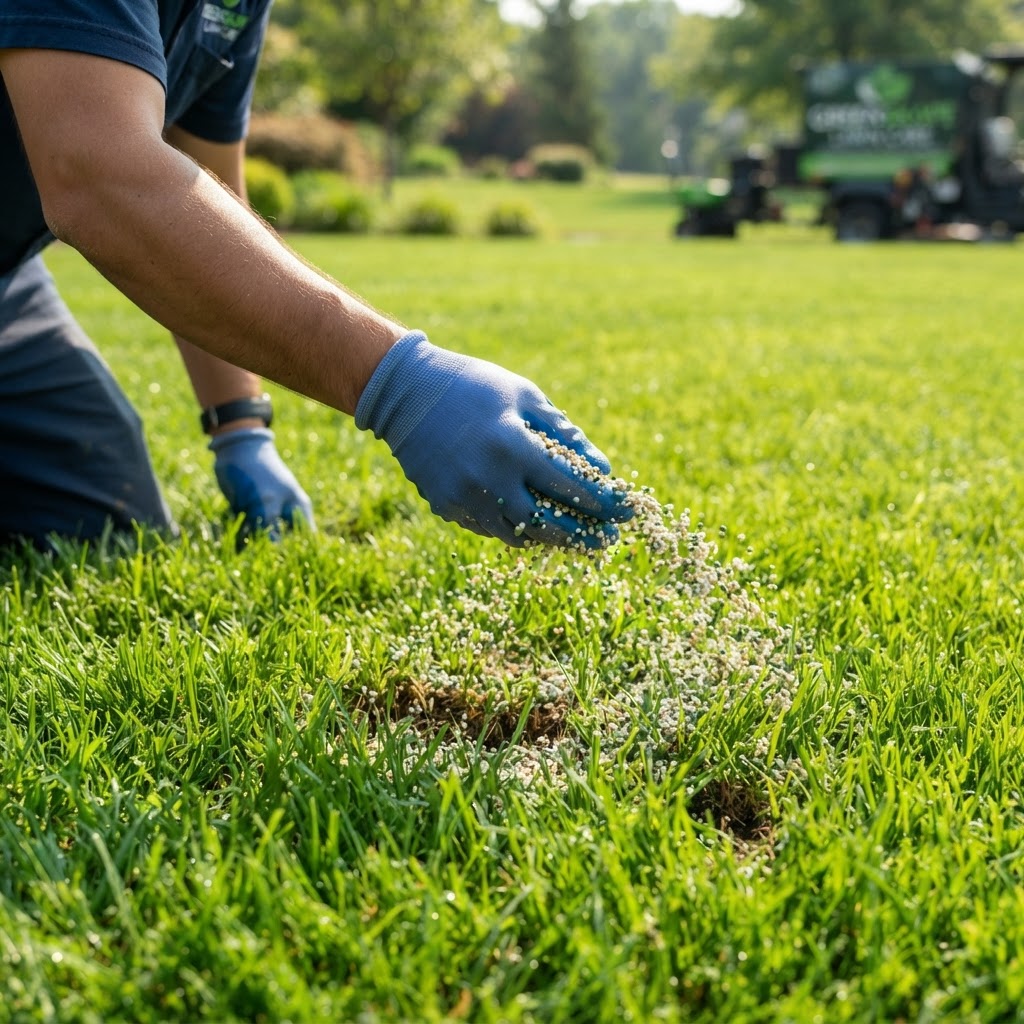
- Use a spreader — broadcast or drop spreader for even coverage.
- Calibrate the spreader — follow the bag's setting recommendations.
- Apply in two passes — the second pass perpendicular to the first for uniform coverage.
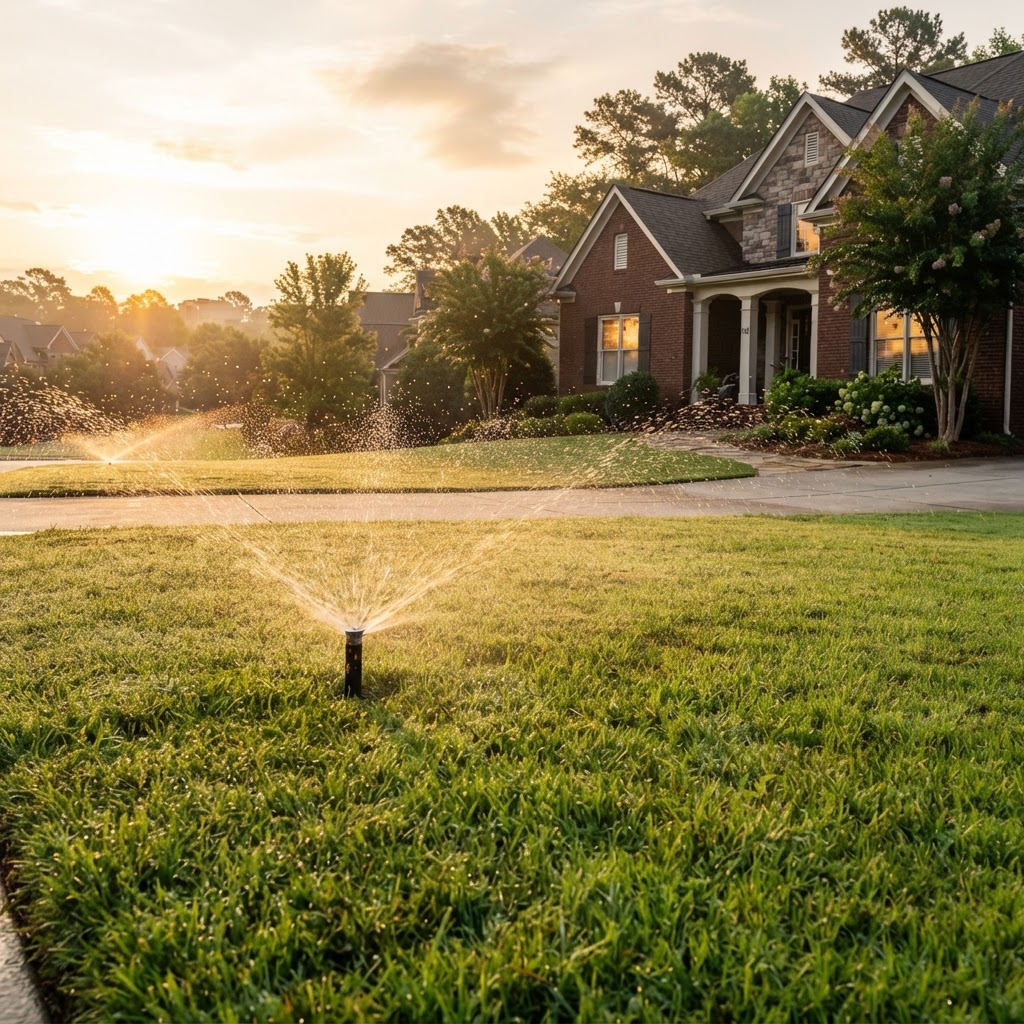
- Water after applying — activates the fertilizer and prevents burning.
- Sweep off hardscapes — fertilizer on driveways and sidewalks washes into storm drains.
Common Fertilizer Mistakes
- Over-fertilizing: Burns grass, causes excessive growth that's vulnerable to disease, and pollutes waterways.
- Wrong timing: Applying nitrogen too late in fall pushes tender growth that winter kills.
- Ignoring the soil test: You might be adding nutrients your lawn doesn't need.
- Not watering in: Dry fertilizer sitting on the lawn can scorch the blades.
Get a Soil Test First
Before starting any fertilizer program, get a soil test. It tells you exactly what nutrients your soil is missing and its pH level. Applying fertilizer without a soil test is like taking medicine without a diagnosis.
Professional Fertilization
LawnSmart's fertilization program is based on soil science, seasonal timing, and your specific grass type. We apply the right nutrients at the right time — no guesswork, no waste. Book a fertilization service today.
Ready for a Healthier Lawn?
Book a professional LawnSmart service today. Free estimates, certified technicians.
Book a Service