The Four Grasses That Make Sense in Orlando
Central Florida sits in the transition zone between tropical and temperate turf country, which narrows your real options to four warm-season grasses. Pick the wrong one and you'll fight your lawn forever. Pick the right one and the lawn almost maintains itself.
1. St. Augustine — The Orlando Default
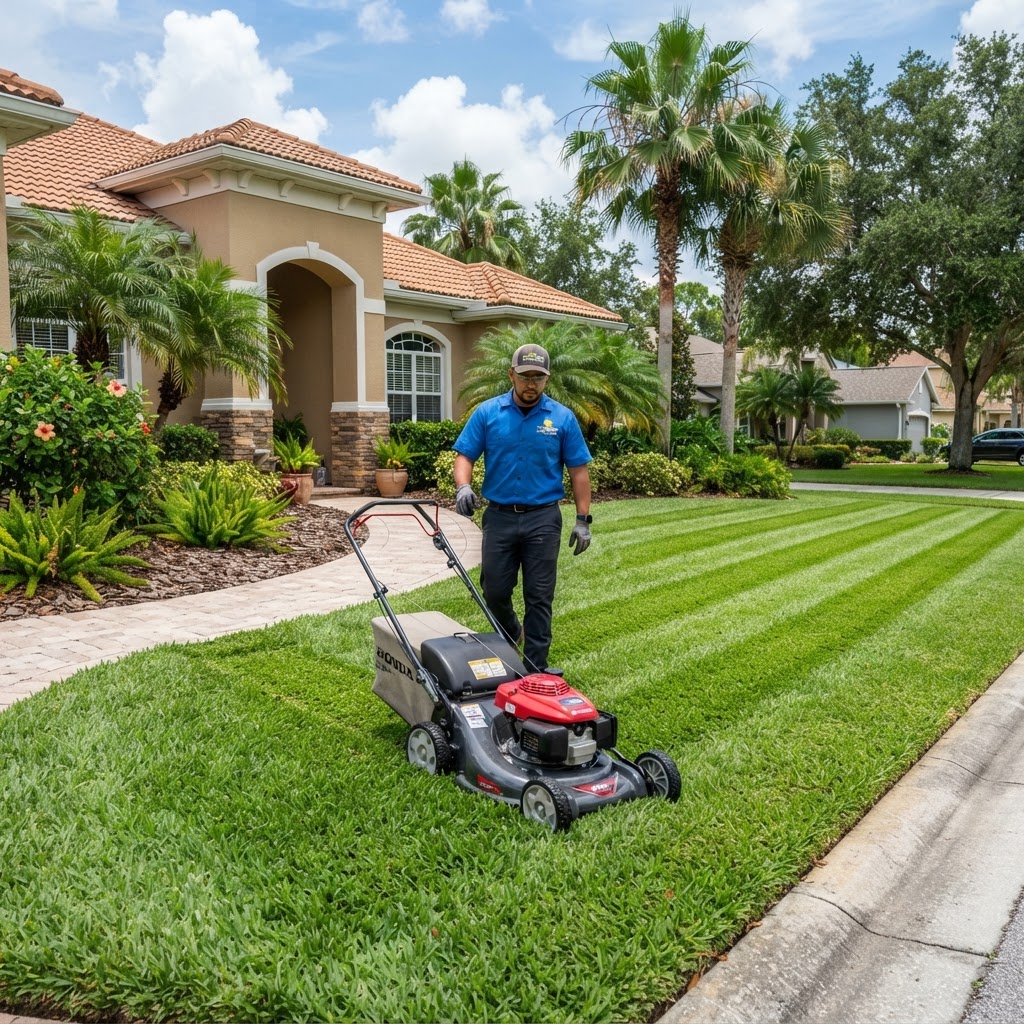
If your neighborhood was sodded with one grass, it's almost certainly St. Augustine (Floratam or Palmetto are the common cultivars).
Pros: Establishes quickly from sod or plugs, tolerates moderate shade better than any other warm-season grass, and produces that thick, broad-bladed carpet look.
Cons: Thirsty, chinch bug prone, vulnerable to large patch fungus and take-all root rot, and it must be mowed high (3.5 to 4 inches). It also can't take heavy foot traffic.
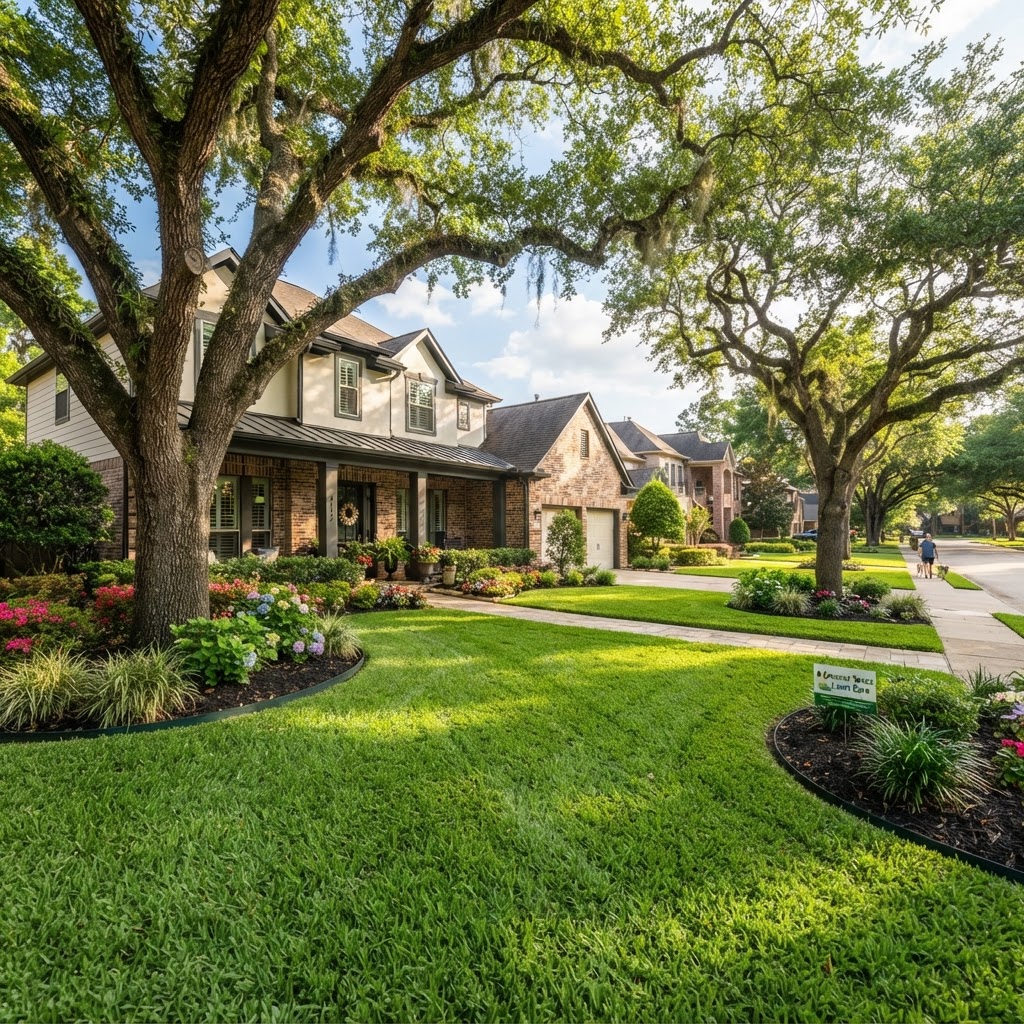
Best for: Most Orlando yards, especially those with mature oaks casting afternoon shade.
2. Zoysia — The Premium Pick
Zoysia (Emerald, Zeon, and Empire are common cultivars) is what the newer communities around Lake Nona, Horizon West, and Winter Garden are increasingly sodding with.
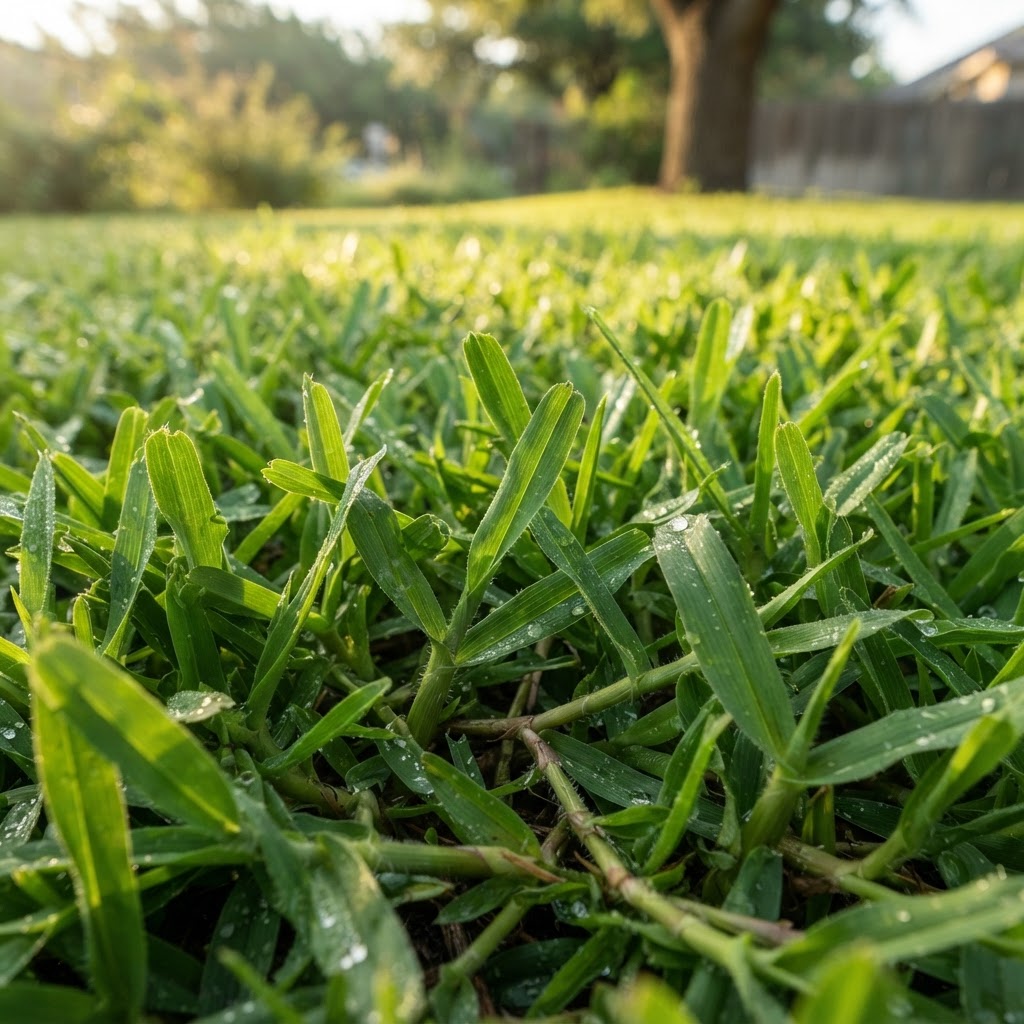
Pros: Extremely dense, chokes out weeds, softer underfoot than it looks, handles traffic well, and uses noticeably less water than St. Augustine once established. It's also far more resistant to chinch bugs.
Cons: Slower to establish, needs full sun for best performance, and requires a sharp blade — a dull mower shreds its fine blades. It also browns out earlier in winter and greens up later in spring.
Best for: Full-sun yards and homeowners who want the nicest lawn on the street and don't mind a slightly higher standard of care.
3. Bermuda — The Workhorse
Common on athletic fields and golf courses, and increasingly on sunny residential lots.
Pros: Most durable grass on this list, tolerates very low mowing, recovers from damage fast, and loves Orlando's heat.
Cons: It wants frequent mowing (twice weekly at low heights during peak season), regular fertilization, and full sun. In shade it thins out badly.
Best for: Wide-open, unshaded yards and homeowners who mow often or use a service.
4. Bahia — The Low-Effort Option
Common on larger lots in east Orange County, Christmas, and the outer Central Florida areas.
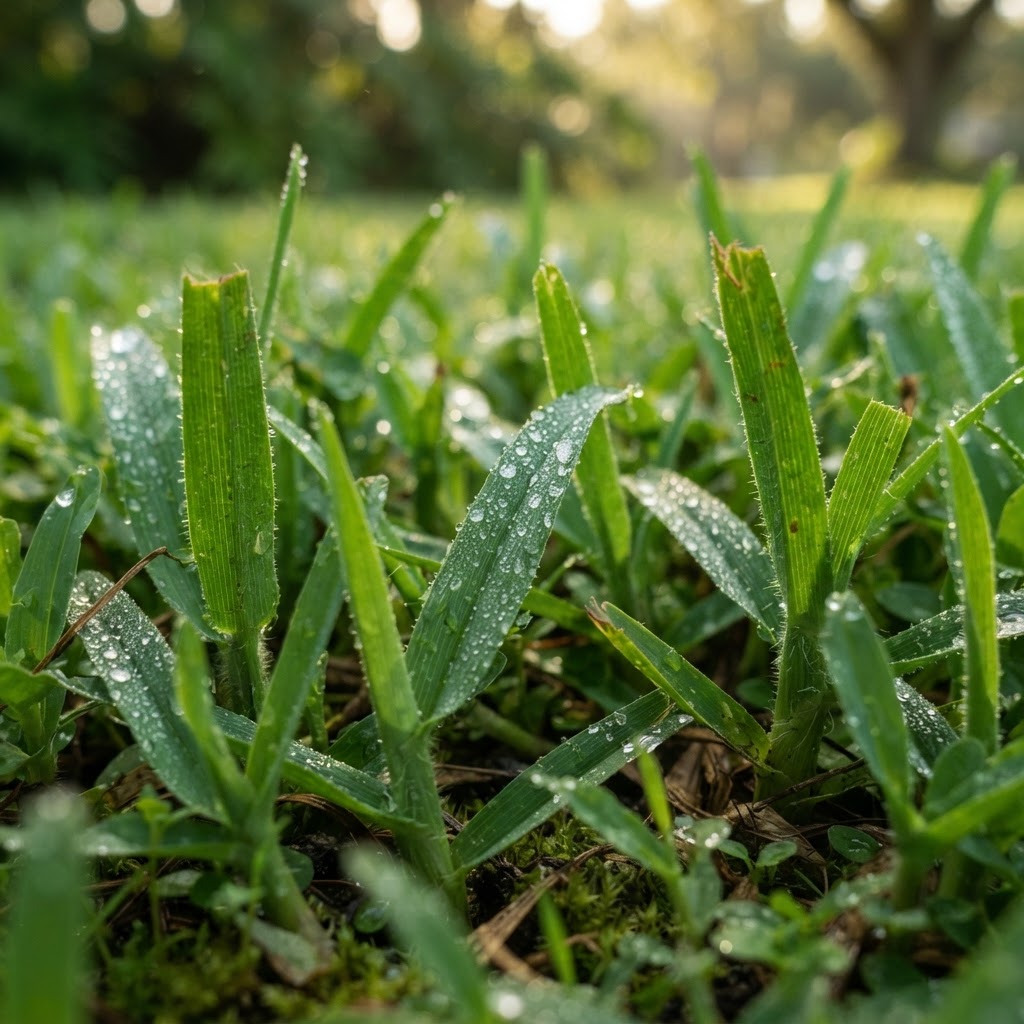
Pros: Survives on rainfall with almost no fertilizer, tolerates poor sandy soil, and is the cheapest to keep alive.
Cons: Open, coarse texture with constant seed heads, and it yellows easily. It's a grass you mow, not a lawn you manicure.
Best for: Big rural lots and anyone who prioritizes cost over looks.
Quick Decision Guide
- Mostly shade under oaks? St. Augustine (Palmetto for heavier shade)
- Full sun, want low water use? Zoysia
- Full sun, want durability? Bermuda
- Huge lot, minimal budget? Bahia
Two Orlando-Specific Notes
Sandy soil is universal here. Central Florida's sandy soil drains fast and holds few nutrients, which is why watering discipline matters more than grass choice. Whatever you plant, water deeply and infrequently.
Fertilizer blackout applies to all of them. Orange, Seminole, and Osceola counties prohibit nitrogen fertilizer June 1 through September 30. Plan your feeding for spring green-up and the fall window.
Already Have Grass? Work With It
Most Orlando homeowners inherit their lawn rather than choose it, and replacing sod is rarely necessary if the grass is being maintained correctly. Matching your mowing height, watering, and fertilization to the grass you actually have solves most lawn complaints.
Not sure what's in your yard or why it's struggling? LawnSmart's local Orlando crews work with all four grass types every week and can quote your lawn instantly from your address.
Ready for a Healthier Lawn?
Book a professional LawnSmart service today. Free estimates, certified technicians.
Book a Service