Your driveway takes a beating. Oil stains, tire marks, algae, mildew, and years of dirt build up slowly — until one day you look down and realize it doesn't look like the same surface anymore. Pressure washing can restore it, but it's not as simple as pointing and spraying.
Why Pressure Wash Your Driveway?
Curb Appeal
A clean driveway is one of the most noticeable improvements you can make to your property's appearance. Realtors report that a freshly pressure-washed exterior can increase perceived home value by $10,000–$15,000.
Safety
Algae and mildew create a slippery surface, especially when wet. Pressure washing removes these hazards and reduces the risk of slips and falls.
Surface Longevity
Dirt, moss, and organic growth break down concrete and asphalt over time. Regular cleaning extends the life of your driveway and prevents costly replacement.
Stain Removal
Oil, rust, tire marks, and organic stains that won't come out with soap and water are no match for a pressure washer.
Can You DIY Pressure Washing?
Yes — but with caveats.
The Risks of DIY
- Too much pressure: A 3,000+ PSI washer can etch concrete, gouge wood, and damage grout lines. The damage is permanent.
- Wrong nozzle: Each nozzle (0°, 15°, 25°, 40°) has a specific use. Using a 0° (pencil jet) on concrete can carve lines into the surface.
- Inconsistent results: Without experience, you'll get streaky, uneven cleaning.
- Chemical damage: Using bleach-based cleaners on certain surfaces can cause discoloration.
What You Need to DIY
- Gas or electric pressure washer (2,000–3,000 PSI for concrete)
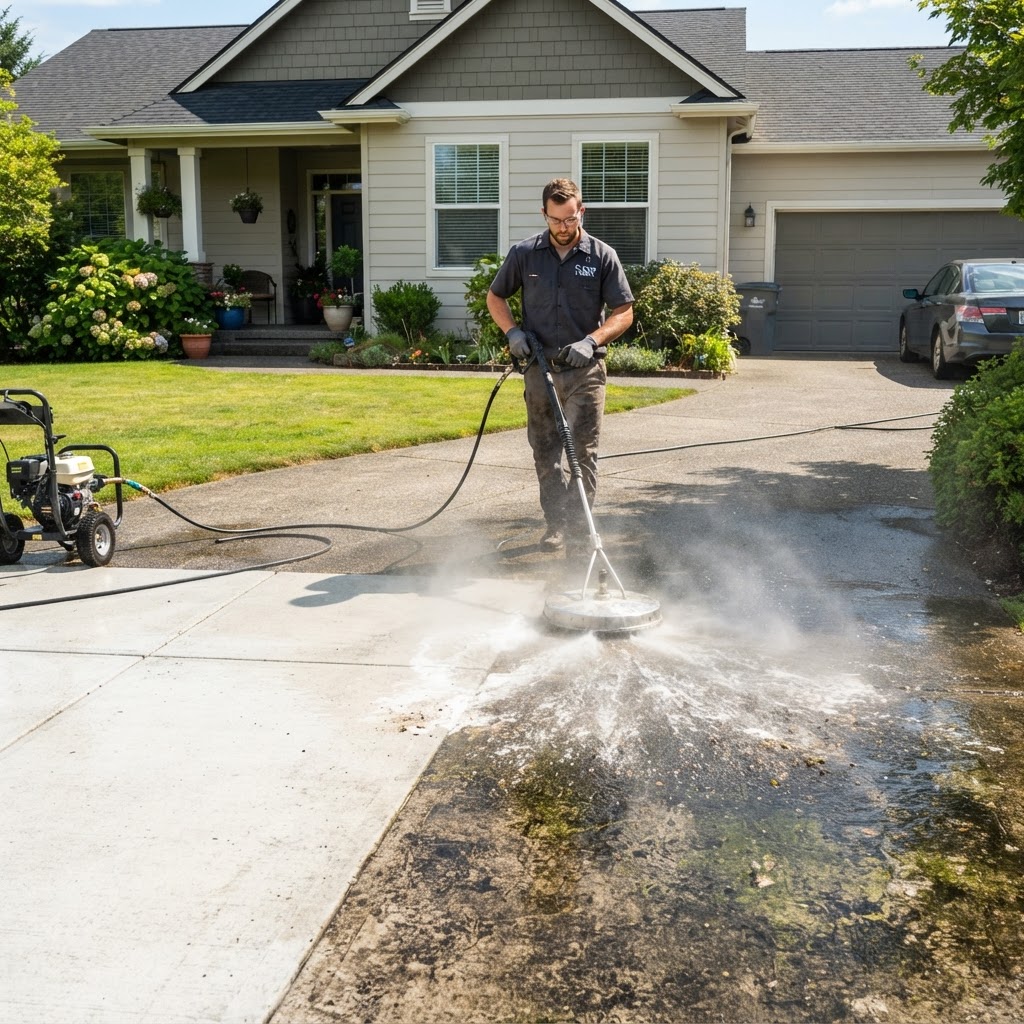
- Surface cleaner attachment (for even, streak-free results)
- Appropriate nozzles
- Degreaser for oil stains
- Safety gear (goggles, closed-toe shoes)
Step-by-Step: Pressure Washing a Driveway
- Clear the area — remove cars, toys, debris, and obstacles.
- Pre-treat stains — apply a concrete degreaser to oil spots and let it sit 10–15 minutes.
- Wet the surrounding area — water nearby plants and grass to dilute any chemical runoff.
- Start with the widest nozzle (25° or 40°) and work in sections.
- Use a surface cleaner attachment for large, flat areas — it cleans evenly and prevents zebra striping.
- Keep the wand moving — never hold it in one spot.
- Work from the house outward — push dirt away from your home.
- Rinse thoroughly — flush all detergent and debris off the surface.
- Let it dry — admire the transformation.
How Often Should You Pressure Wash?
- Driveways and walkways: Once per year
- Home siding: Every 1–2 years
- Decks and fences: Every 2–3 years
- Patios: Once per year
When to Hire a Pro
If you have a large driveway, stubborn stains, delicate surfaces, or just don't want to buy and store equipment — hire a professional. LawnSmart uses commercial-grade pressure washers and surface cleaners to deliver streak-free, damage-free results on driveways, patios, walkways, and siding. Book a pressure washing service today.
Ready for a Healthier Lawn?
Book a professional LawnSmart service today. Free estimates, certified technicians.
Book a Service