If your lawn has thin patches, bare spots, or just looks tired after a long Atlanta summer, overseeding is the answer. It's one of the most effective ways to thicken your lawn, fill in gaps, and improve overall health — without starting from scratch.
What Is Overseeding?
Overseeding is the process of spreading grass seed over an existing lawn without tearing up the soil. It introduces new, vigorous grass plants that fill in thin areas and improve the lawn's density, color, and disease resistance.
Why Overseed?
Thicken Thin Lawns
Even a healthy lawn thins over time. Grass plants age, and after 5–6 years, their growth rate slows. Overseeding introduces young, vigorous plants that fill in gaps.
Improve Disease Resistance
Newer seed varieties are bred for improved disease and drought tolerance. Overseeding introduces these improved genetics to your lawn.
Repair Summer Damage
Heat, drought, foot traffic, and pests take a toll. Overseeding in fall repairs the damage while conditions are ideal for germination.
Reduce Weeds
A thick lawn is the best weed defense. Dense grass crowds out weed seeds before they can germinate.
When to Overseed
For warm-season grasses (Bermuda, Zoysia): Late spring to early summer (May–June) when soil temperatures are 70°F+.
For tall fescue (cool-season): Early fall (September–October) when soil temps are 55–65°F and nights are cool.
Fall is ideal for fescue because the warm soil speeds germination, cool air reduces heat stress, and there's less competition from weeds.
How to Overseed — Step by Step
Step 1: Mow Low
Cut your lawn shorter than usual (about 1 inch for warm-season, 2 inches for fescue). This helps seed reach the soil.
Step 2: Dethatch and Aerate
Remove dead grass and thatch so seed can contact soil. Aerate first — the holes give seeds a place to settle and germinate.
Step 3: Choose the Right Seed
Match your existing grass type. If you have Bermuda, overseed with Bermuda. Mixing grass types creates an uneven, patchy appearance.
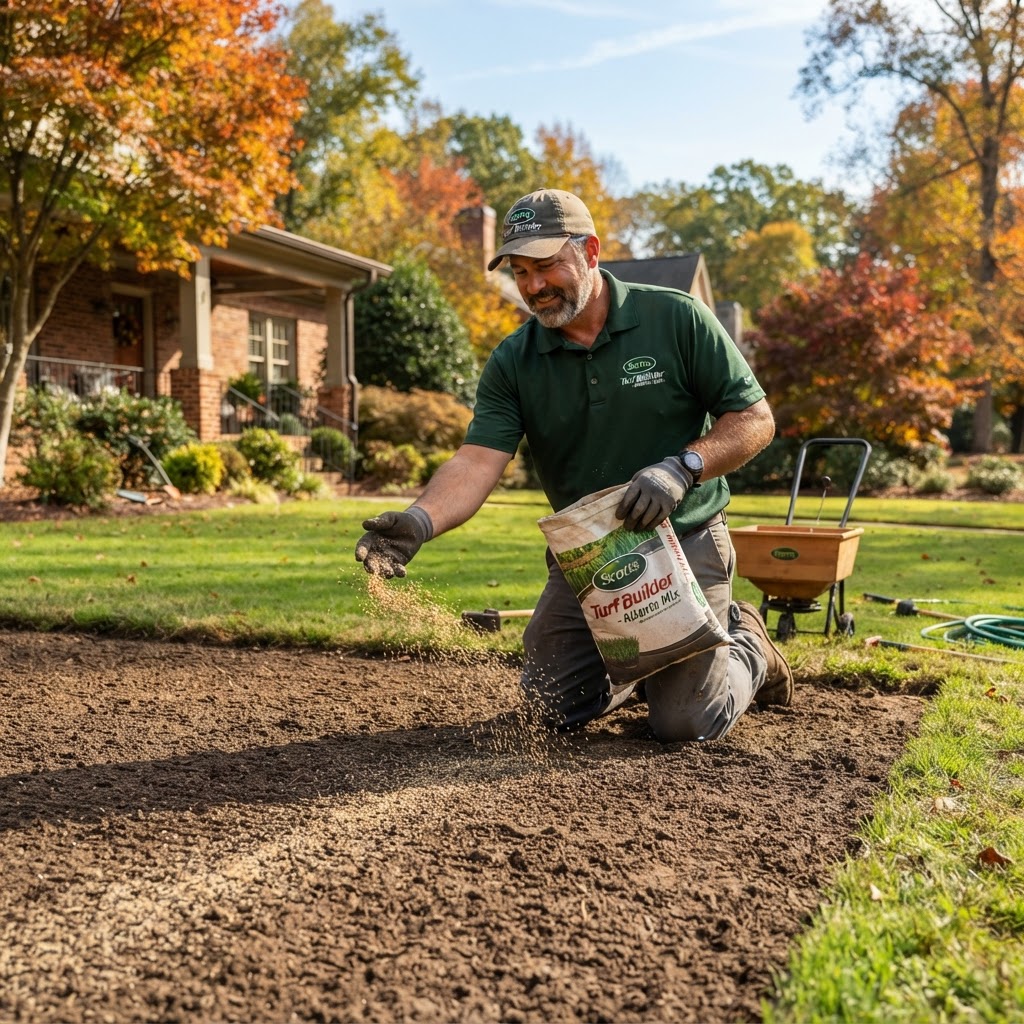
Step 4: Spread the Seed
Use a broadcast spreader for even coverage. Apply at the rate recommended on the seed bag — typically 3–5 lbs per 1,000 sq ft for overseeding.
Step 5: Apply Starter Fertilizer
A phosphorus-rich starter fertilizer boosts root development in new seedlings. Apply at seeding time.
Step 6: Water Correctly
This is the most critical step. Keep the soil consistently moist — not soggy — for 2–3 weeks:
- Water 2–3 times per day (light misting)
- Reduce to once daily when seedlings reach 2 inches
- After 4 weeks, transition to deep, infrequent watering
Step 7: Wait to Mow
Don't mow until the new grass is at least 3 inches tall. When you do mow, set the blade high and avoid sharp turns that can tear young plants.
Common Overseeding Mistakes
- Skipping soil preparation — seed on hard, compacted soil won't germinate
- Wrong seed type — mixing grass varieties looks patchy
- Not watering enough — seed must stay moist until established
- Mowing too soon — young plants are easily uprooted
- Applying weed killer — pre-emergent herbicides prevent grass seed from germinating
Professional Overseeding
LawnSmart combines aeration, overseeding, and starter fertilizer in one professional service. We use premium seed matched to your grass type and handle every step — from soil prep to the first mow. Book your overseeding service today.
Ready for a Healthier Lawn?
Book a professional LawnSmart service today. Free estimates, certified technicians.
Book a Service