Watering seems simple — turn on the sprinkler and let it run. But how and when you water has a bigger impact on your lawn's health than how much you water. Get it wrong, and you're wasting water, money, and potentially damaging your grass.
The Golden Rule: Deep and Infrequent
The single most important watering principle is this: water deeply and infrequently. This encourages grass roots to grow deep into the soil, making your lawn more drought-tolerant and resilient.
Frequent, shallow watering does the opposite — it trains roots to stay near the surface, where they dry out quickly and become dependent on daily watering.
How Much Water Does Your Lawn Need?
Your lawn needs about 1 to 1.5 inches of water per week during the growing season — from rainfall, irrigation, or a combination.
To measure how long your sprinkler takes to deliver one inch:
- Place flat-bottomed containers (like tuna cans) around your yard.
- Run the sprinkler for 30 minutes.
- Measure the water depth in each container.
- Calculate how long it takes to reach 1 inch.
Best Time to Water
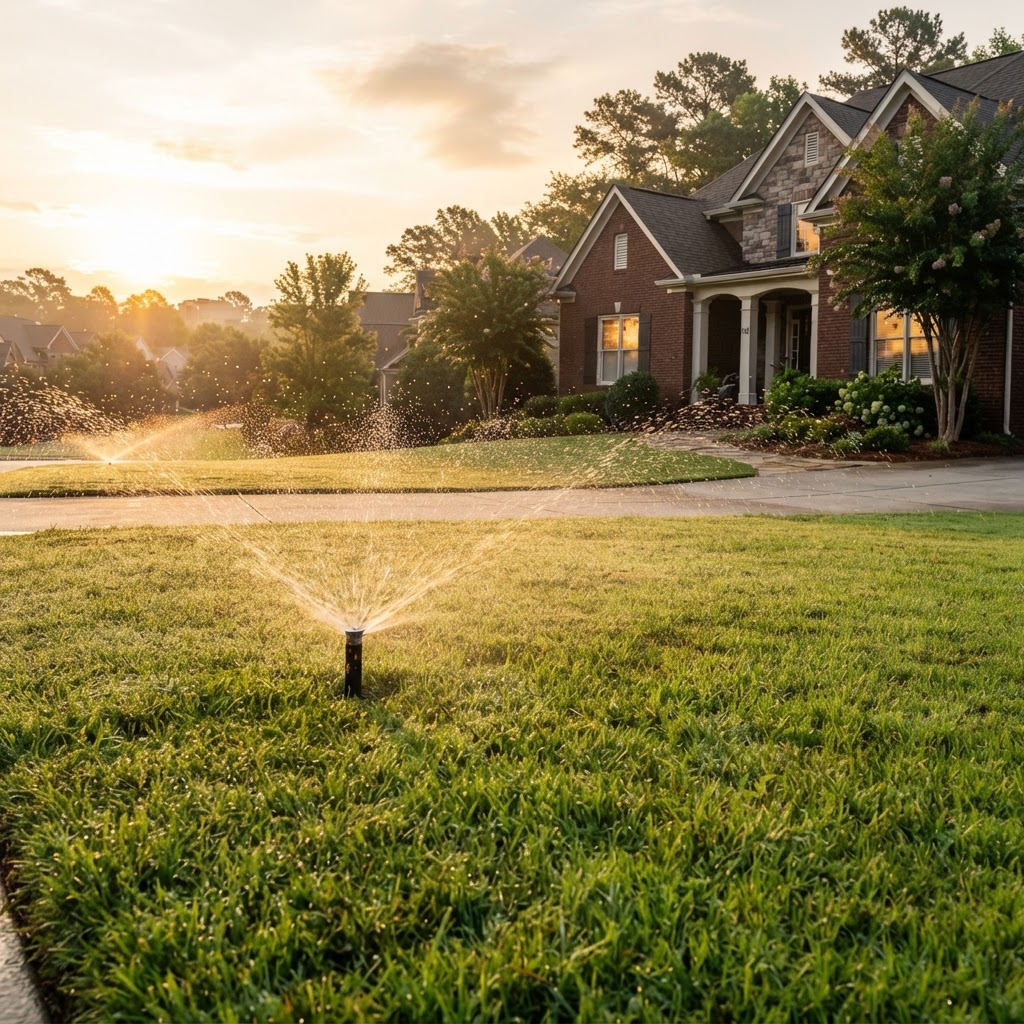
Early morning (5:00–9:00 AM) is the ideal time to water.
- Low wind means water goes where you aim it.
- Cooler temperatures reduce evaporation.
- Grass has time to dry before nightfall, reducing disease risk.
Worst times:
- Midday: Up to 50% of water evaporates before reaching the roots.
- Evening: Grass stays wet overnight, creating ideal conditions for fungal diseases.
Signs Your Lawn Needs Water
- Grass blades fold or roll up (a natural defense mechanism)
- Footprints remain visible after walking on the lawn (grass doesn't spring back)
- Color changes from vibrant green to bluish-gray or dull green
- Soil feels dry 4–6 inches below the surface
Watering by Season
| Season | Frequency | Notes | |--------|-----------|-------| | Spring | 1–2x per week | Supplement rainfall as needed | | Summer | 2–3x per week | Increase during heat waves | | Fall | 1x per week | Reduce as temperatures drop | | Winter | None (dormant) | Warm-season grasses need no water |
Common Watering Mistakes
- Watering every day — trains shallow roots, wastes water
- Watering in the evening — invites fungal disease
- Overwatering — drowns roots, leaches nutrients, promotes weeds
- Ignoring rainfall — use a rain gauge and skip watering after rain
- Uneven coverage — check for dry spots and adjust sprinkler heads
Smart Irrigation Tips
- Install a rain sensor to automatically skip watering after rain.
- Use soaker hoses or drip irrigation in garden beds to save water.
- Group plants by water needs so you're not overwatering drought-tolerant areas.
- Aerate your lawn annually — compacted soil repels water, leading to runoff.
Professional Help
LawnSmart can assess your lawn's watering needs, recommend irrigation schedules, and ensure your lawn gets exactly the right amount of moisture. Book a consultation today.
Ready for a Healthier Lawn?
Book a professional LawnSmart service today. Free estimates, certified technicians.
Book a Service