You water, you mow, you fertilize — and yet brown patches keep appearing. The culprit might be hiding beneath the surface: lawn pests. Grubs, chinch bugs, and armyworms can devastate a healthy lawn in weeks. Here's how to identify and stop them.
The Most Common Atlanta Lawn Pests
White Grubs
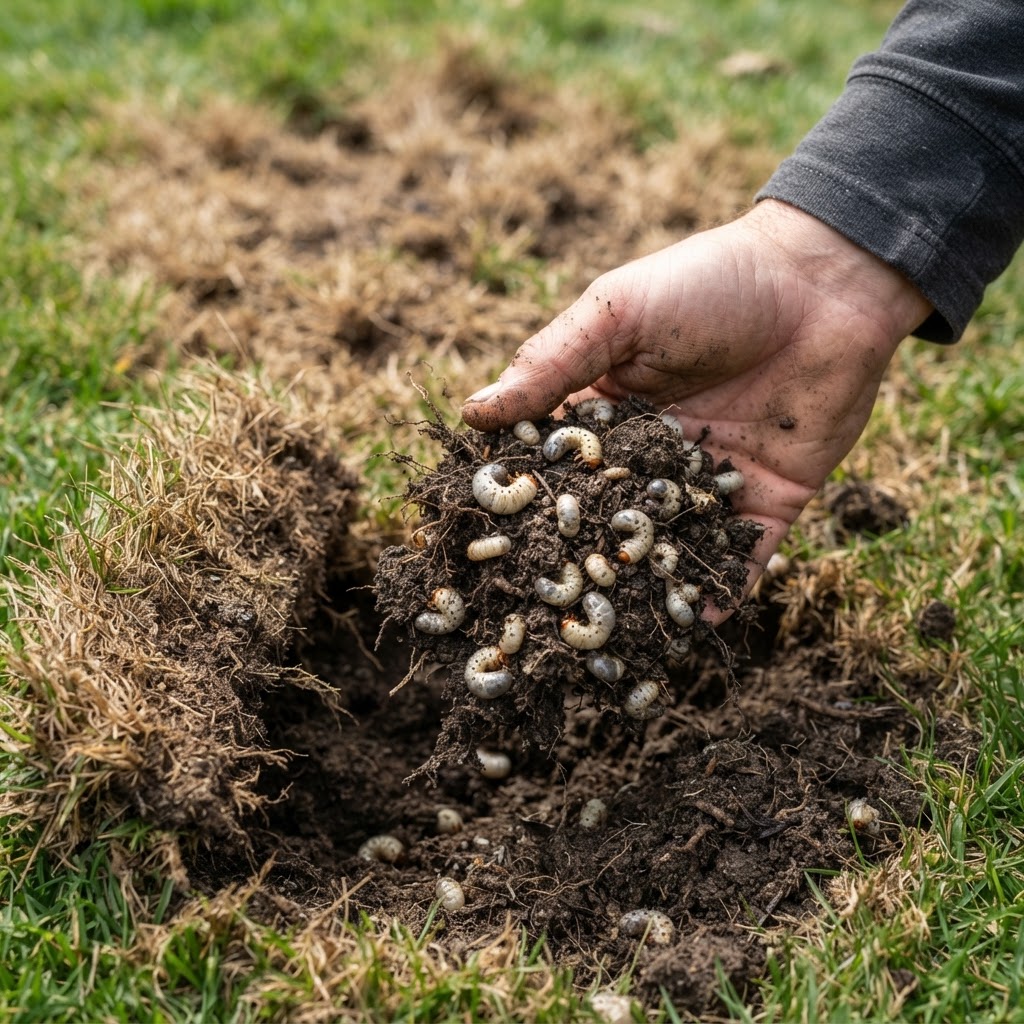
Grubs are the larvae of Japanese beetles, June bugs, and other scarab beetles. They live in the soil and feed on grass roots.
Signs of grub damage:
- Irregular brown patches that grow over time
- Grass pulls up easily like loose carpet (roots are eaten)
- Spongy feel when walking on the lawn
- Increased bird or raccoon activity (they dig for grubs)
Active: Late summer to early fall
Chinch Bugs
Tiny insects that suck sap from grass blades and inject toxins, causing the grass to die.
Signs of chinch bug damage:
- Expanding yellow-to-brown patches in full sun areas
- Damage often appears near pavement or dry areas
- Grass doesn't recover with watering
Active: Summer (June–August)
Fall Armyworms
Caterpillars that march across lawns eating grass blades. They can destroy a lawn in a matter of days.
Signs of armyworm damage:
- Rapid, large-scale browning
- Bare patches appearing almost overnight
- Birds flocking to the lawn to feed
- Visible caterpillars on the grass
Active: Late summer to fall
Mole Crickets
Insects that tunnel through the soil, uprooting grass and damaging roots.
Signs of mole cricket damage:
- Raised tunnels or mounds of soil
- Spongy, loose turf
- Grass dies in irregular patches
Active: Summer to early fall
How to Check for Pests
- The tug test: Grab a handful of brown grass and pull. If it lifts easily like a carpet, grubs have eaten the roots.
- The soap flush: Mix 2 tablespoons of dish soap in 2 gallons of water. Pour over a 2x2 foot area. Pests will surface within 10 minutes.
- Visual inspection: Part the grass and look for insects in the soil or on the blades.
Prevention
- Healthy lawn: A thick, well-maintained lawn resists pest damage better than a stressed one.
- Proper watering: Deep, infrequent watering encourages deep roots that can tolerate some pest feeding.
- Don't over-fertilize: Excess nitrogen attracts insects and creates lush, vulnerable growth.
- Beneficial nematodes: These microscopic organisms naturally control grub populations.
Treatment Options
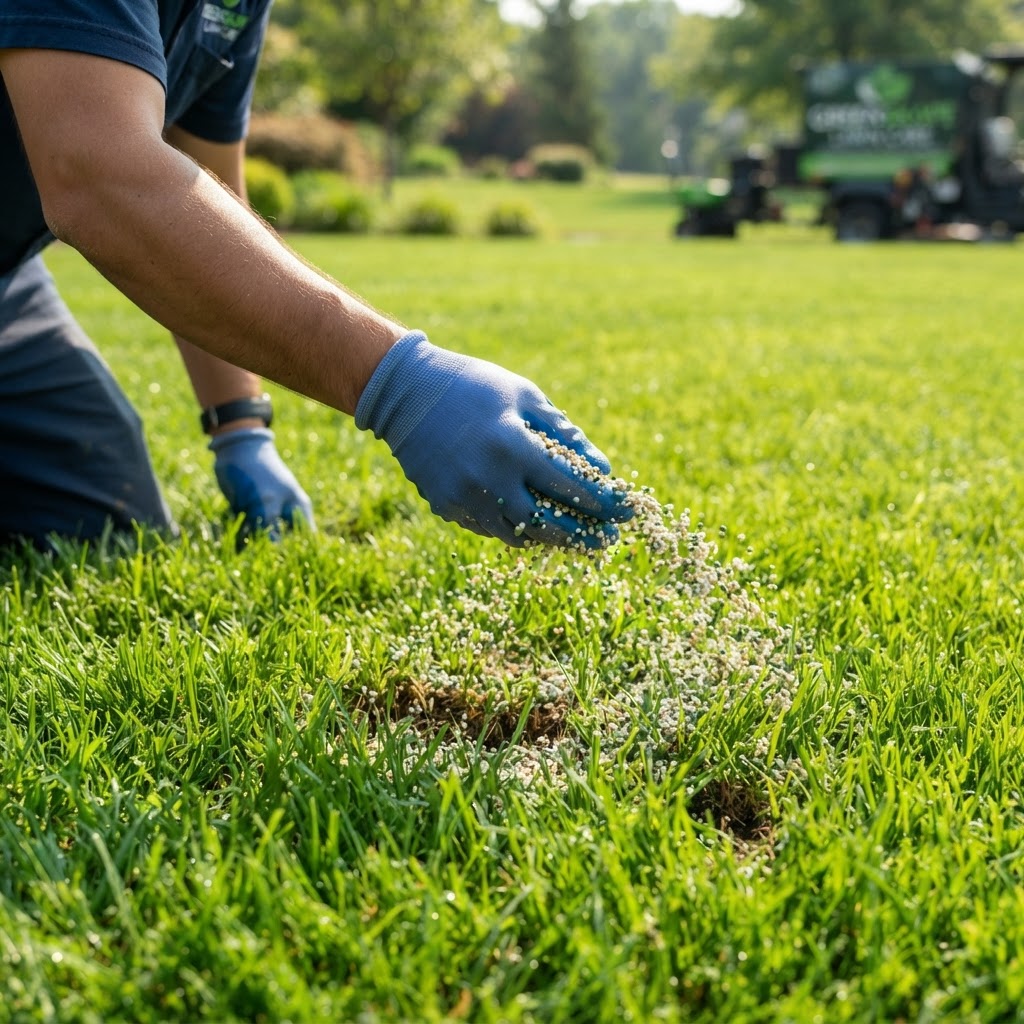
- Biological controls: Beneficial nematodes and milky spore for long-term grub suppression.
- Targeted insecticides: Applied when pests are active. Timing is critical — apply grub control in late summer when larvae are small and near the surface.
- Lawn recovery: After treatment, overseed damaged areas and apply fertilizer to help the lawn recover.
When to Call a Pro
Misdiagnosing lawn pests leads to wasted money and continued damage. LawnSmart's technicians accurately identify the pest, assess the severity, and apply the right treatment at the right time — protecting your lawn without unnecessary chemicals. Book a pest control assessment today.
Ready for a Healthier Lawn?
Book a professional LawnSmart service today. Free estimates, certified technicians.
Book a Service