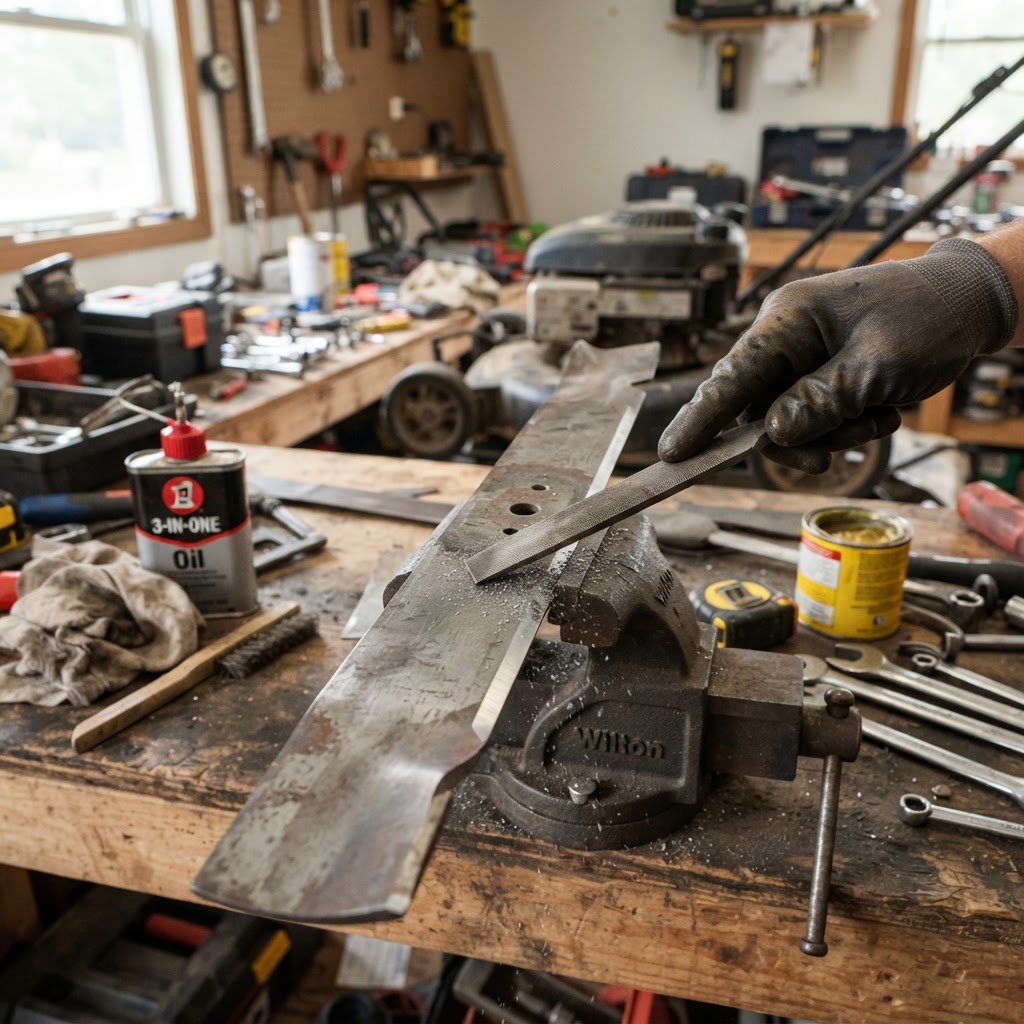
A sharp mower blade is the difference between a clean, healthy cut and a ragged, disease-prone lawn. Yet blade maintenance is one of the most overlooked aspects of lawn care. Here's why it matters and how to keep your blades in top shape.
Why a Sharp Blade Matters
Clean Cuts = Healthier Grass
A sharp blade slices grass cleanly. A dull blade tears and shreds the grass blade, leaving ragged edges that:
- Lose moisture faster (increased drought stress)
- Are more susceptible to disease
- Turn brown at the tips, giving the lawn a yellowish cast
Better Lawn Appearance
Torn grass heals slowly and develops brown, frayed tips. A sharp blade produces a clean cut that heals quickly, keeping your lawn vibrant and uniformly green.
Reduced Fuel Consumption
A sharp blade requires less engine effort to cut through grass. This means lower fuel consumption for gas mowers and longer battery life for electric models.
Fewer Weed Problems
Dull blades stress the grass, creating openings for weed seeds to germinate. Healthy, cleanly-cut grass is denser and more competitive against weeds.
Signs Your Blade Needs Sharpening
- Grass tips look torn, ragged, or brown after mowing
- Lawn has a yellowish or brown tint despite being healthy
- Mower struggles or stalls in tall grass
- You've hit rocks, roots, or debris since the last sharpening
- It's been 20+ hours of mowing since the last sharpening
How Often to Sharpen
- Average homeowner: 1–2 times per season (every 20–25 mowing hours)
- Professional/Large property: Every 8–10 hours of use
- After hitting debris: Sharpen immediately — nicks and dents damage grass
How to Sharpen a Mower Blade
Tools Needed
- Socket wrench (to remove the blade)
- Bench vise or blade balancer
- Metal file or bench grinder
- Balancer (or a nail in the wall)
- Safety gloves and glasses
Steps
- Disconnect the spark plug (gas mowers) or battery (electric) — this prevents accidental starts.
- Remove the blade — tip the mower on its side with the carburetor facing up to avoid oil leaks.
- Secure the blade in a bench vise.
- File at the original angle — follow the existing bevel angle (usually 30–45 degrees). Use smooth, consistent strokes in one direction.
- Don't over-sharpen — a blade that's too sharp dulls faster. A sharp edge with a slight blunt surface lasts longer.
- Check balance — hang the blade on a balancer or nail. If one side drops, file the heavy side until it balances. An unbalanced blade damages the mower engine.
- Reinstall the blade — tighten the bolt securely.
When to Replace vs. Sharpen
Sharpen your blade when it's dull but structurally sound. Replace it when:
- The blade is cracked or bent
- The cutting edge has large nicks that can't be filed out
- The blade is thin or worn from years of sharpening
- The lift wing (the curved back edge) is worn down
Keep a Spare Blade
Having a sharp spare blade means you can swap blades in minutes and sharpen the dull one at your convenience — no downtime.
Professional Blade Maintenance
At LawnSmart, we sharpen and balance our commercial mower blades regularly — often daily during peak season. Every LawnSmart mowing service is performed with razor-sharp blades for the cleanest, healthiest cut. Book your mowing service today.
Ready for a Healthier Lawn?
Book a professional LawnSmart service today. Free estimates, certified technicians.
Book a Service